




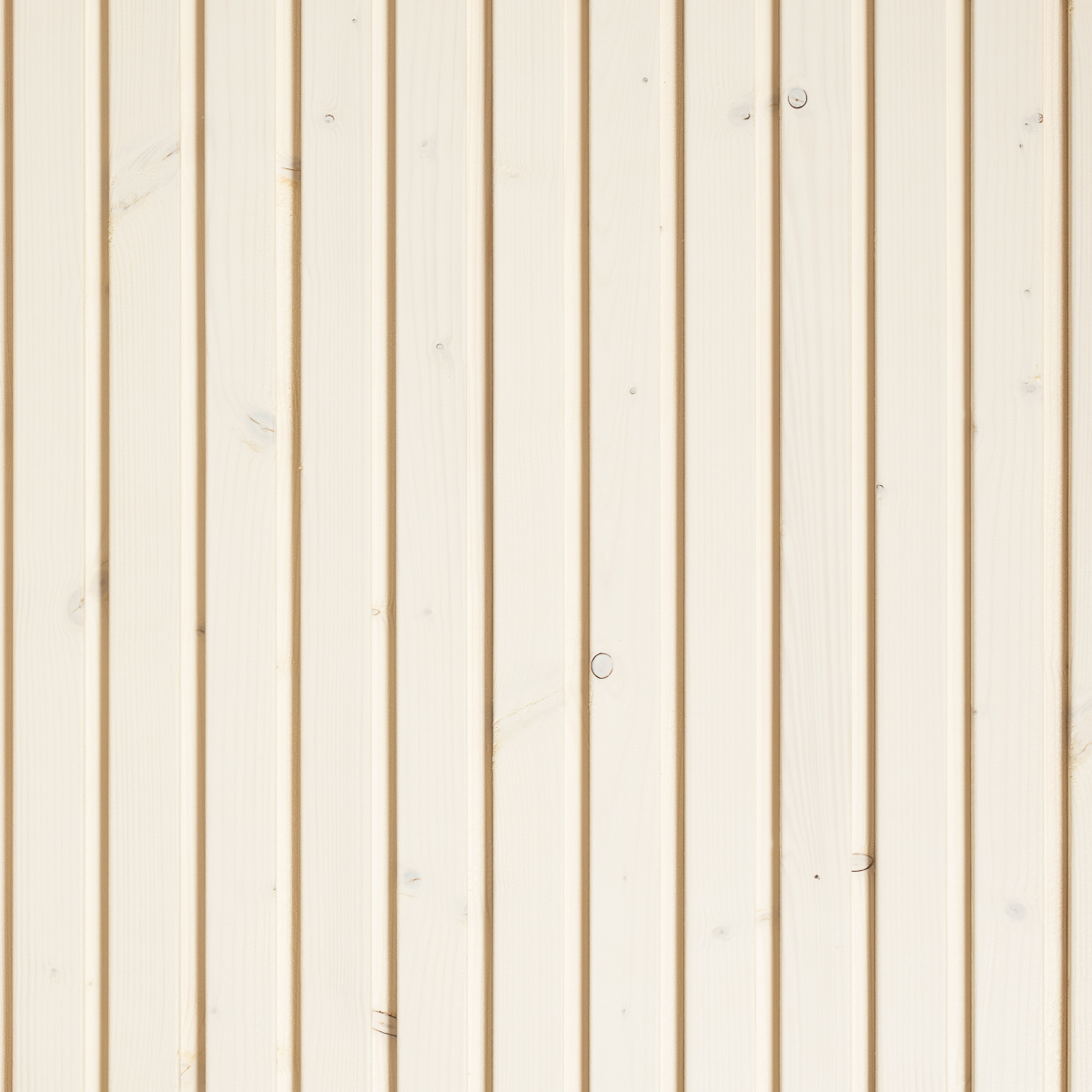
✅ Made from Finnish wood, responsibly produced
✅ Completely natural and safe product
✅ Light and fresh appearance
✅ Handles moisture fluctuations well
✅ PEFC-certified
| Length | Available | |
|---|---|---|
| 4.20 m | 218.40 m |
For treating cut surfaces, we recommend a translucent sauna protection finish in shade TVT 3466.
✅ Finnish wood, responsibly manufactured in Lempäälä
✅ Completely natural and safe product
✅ Light and fresh appearance
✅ Excellent resistance to moisture fluctuations
✅ PEFC-certified
Our product uses spruce, a domestic, versatile, and strong softwood that handles moisture changes well. Easy to work with and finish, spruce is ideal for interior use, saunas, and, when treated, exterior cladding. Its warm light color and straight-grained pattern make spruce an aesthetically pleasing choice for visible surfaces. Our PEFC-certified spruce products are responsibly produced and environmentally friendly.
Product information
| Tuotenimi | RIMAPANEELI KUUSI 28 x 58 TK VALKOLAKATTU |
| Tuotenumero | 4961 |
| Alkuperämaa | Suomi |
| Toimitusaika | huomenna, kun tuotetta varastossa |
| Saatavuus | Tuote poistuu valikoimasta |
| CN-koodi | Spruce - Sawn - CN 4407 1290 |
Product measurements
| Vahvuus (mm) | 28 |
| Leveys (mm) | 58 |
| Paino (kg/myyntiyksikkö) | 0,55 |
| Neliömenekki (m/m²) | 20 |
| Hyötyleveys (mm) | 50 |
| Pakkauskoko (kpl/pkt) | 4 |
Product features
| Puulaji | Kuusi |
| Pintakäsittely | Värillinen lakkaus |
| Päätyponttaus | Ei |
| Piilokiinnityspontti | Ei |
| Palokäyttäytyminen | D-s2, d0 |
Sustainability
| CE-merkintä | Ei |
| PEFC-serfitiotu | Kyllä |
Grading rules
You can download the grading rules applied in the manufacture of this product here: Spruce
Minimum order size
Please note that we deliver our products in bundles. Bundle size is indicated together with stock information on top right corner.
Surface treatment brings out the best in wood
The right surface treatment finishes the wood for exactly the purpose it's meant for. It protects the wood, extends its life cycle and gives it a color that suits the look of your home or building.
Not all wood needs treatment, but surface treatment lets you highlight different qualities of the wood. When the wood is treated during manufacturing, it's ready to install right away. This makes tight construction and renovation schedules easier to manage.
Why choose industrial surface treatment?
We paint and treat the wood on our own industrial paintline right after planing. At that point, the wood surface is open and the paint or treatment soaks in effectively. The temperature and humidity on our paintline stay constant, so the paint spreads evenly and dries properly. The result lasts longer than paint applied on site at the mercy of the weather.
- You save time. Industrially treated wood is ready to install, so there's no need to wait for good painting weather on site.
- You get an even finish. In controlled conditions, every board and panel receives the same treatment.
- The wood is protected during construction. The surface treatment protects the wood from rain and sunlight from the moment it's installed.
Surface treatment options
The right surface treatment depends on how the wood will be used and the look you're after.
- Opaque paint covers the grain of the wood and gives the surface an even, finished color. Outdoors, opaque paint protects the wood for a long time.
- Semi-transparent treatment gives the wood a color tone while letting its natural grain show through.
- Sauna protection treatment helps wooden sauna surfaces withstand high temperatures and humidity. It also makes the surface easier to keep clean.
- Fire-retardant treatment gives the wood surface a fire classification of B-s1, d0. This is the highest class available for wood construction products, so fire-retardant wood can also be used in buildings with strict fire safety requirements.
Good to know about wood species
Wood species differ from one another, and the need for treatment depends on both the species and how the wood is used.
- Spruce always needs a protective surface treatment outdoors. Spruce cladding is painted with either semi-transparent or opaque paint.
- Douglas fir and larch are naturally rot-resistant and dense, so they don't need surface treatment outdoors. Left untreated, they turn a beautiful silvery gray over time.
- Thermally modified wood has excellent dimensional stability thanks to thermal modification.
- For wood used in saunas, we recommend sauna protection treatment regardless of the species.
Responsibly treated
We use water-based paints and treatments from well-known manufacturers. Water-based products contain fewer solvents than solvent-based ones, so they put less strain on the environment and indoor air.
DID YOU KNOW? Because we want to operate as sustainably as possible, each batch we treat must be at least 500 meters. This way, we don't waste raw materials, and our operations stay efficient.
Ask us more
We have long experience in wood surface treatment, and we're happy to help you find the right treatment for your project. Contact our sales team to learn more about the options.
Installing interior panels
Wooden panels bring warmth and atmosphere to your home. They're suitable for dry indoor spaces, such as living rooms, bedrooms and hallways, and are most often used on ceilings.
The color of the wood changes over time due to light and changes in humidity. Dark thermally modified wood becomes lighter, and light wood becomes darker.
Storage and acclimatization
- Let the panels acclimatize. Bring the panels into the room where they will be installed 1–2 weeks before installation.
- Store the panels correctly. Store the panels horizontally in their unopened small packs, at least 30 mm off the ground.
- Keep conditions stable. During storage, the humidity must not rise above the normal level for the room where the panels will be used, and the temperature must be higher than outdoors.
Good to know: Wet work, such as leveling and tiling, raises the humidity in a room significantly. Panels stored in the same room will swell. A construction heater, on the other hand, dries the air and makes the wood shrink, and a rapid drop in humidity can cause the wood to crack. If the packs have been stored in a tight bundle, the packs in the middle and on the outside of the bundle may have different moisture levels. That's why it's a good idea to break up the bundle and let the small packs acclimatize unopened.
Before installation
- Allow for waste. Order about 10% more panels than the calculated quantity.
- Allow extra length for cutting. The stated product length is not an exact measurement, so choose panels that are at least 5 cm longer than you need.
- Plan the direction and joints. Decide in advance which way the panels will run and where any joints will go.
- Sort the panels. Sort the panels by color or knots so that you can spread them evenly across the whole surface.
Battens
The panels are installed on battens, which always run across the panels.
- Ceiling: Install the battens at right angles to the direction of the panels.
- Horizontal paneling on walls: Install the battens vertically.
- Vertical paneling on walls: Install the battens horizontally.
Make sure the battens are straight. On a ceiling, even small irregularities are easy to see, so check that the battens are straight with care, for example with a line laser or a long straightedge. Choose the batten spacing to suit the project, but no more than 600 mm.
Paneling a ceiling
- Choose the direction according to the light. When the panels run away from the window wall, in the direction of the light, joints and small irregularities are less visible.
- Plan lighting and electrical work in advance. Mark the positions of light fixtures and wiring before paneling so that they end up in the right places and not where the battens are. Electrical work must only be done by a qualified electrician.
- Start on a straight line. Check the line of the first panel carefully, as it determines how straight the whole ceiling will be.
- Work in pairs. Long panels are easier to install on a ceiling when one person holds them up and the other fastens them. You can also use a ceiling prop.
Install the panels
- Leave room for movement. Wood moves with changes in humidity, so leave a gap of about 10 mm between the panel and the wall. The gap will be hidden behind the ceiling molding or baseboard.
- Panel several walls at the same time. When paneling several walls horizontally, work on all the walls at once, one row at a time. This lines up the panels precisely at the corners.
- Make sure the tongues and grooves are fully engaged before fastening.
- Check the cover width. Measure at regular intervals to make sure the cover width of the panels stays as planned.
Fastening
You can fasten the panels with nails or staples. The fastening method depends on the panel profile and whether you want the fasteners to be hidden.
- Face fastening: We recommend fastening the panels straight through the face of the panel. This is the easiest and most reliable method.
- Panels with a hidden-nail profile: Fasten the panels through the groove. This keeps the fasteners hidden.
- Hidden fastening on other panels: You can also fasten the panels through the tongue so that the fastener is hidden. In this case, the last panel must be ripped to the right width and fastened through the face, so its fasteners remain visible. On walls with horizontal paneling, you have to start from the bottom.
Thermally modified panels: Use stainless steel fasteners and fasten the panels with a nailer. Avoid nailing by hand, so the hammer doesn't leave marks and the panel doesn't crack.
Protect the panel surface when nailing. Use a protective tip on your nailer so that the fastening points are free of dents and marks.
If you're unsure about any step, ask a professional installer for help.
Surface treatment and care
- If the panels are not factory-treated, treat them with a product designed for indoor use. The treatment finishes the surface and protects the wood.
- Remove dust with a soft brush or a dry cloth. Clean dirty spots with a damp cloth and a mild detergent.
Caring for interior panels
Proper cleaning keeps surfaces in good condition and looking beautiful.
- Remove dust regularly with a soft brush, a vacuum cleaner or a dry cloth.
- Wipe dirty spots with a damp cloth and a neutral detergent. Avoid using a lot of water or strong detergents.
- Maintain the surface in good time. The maintenance interval for the surface treatment depends on the product and where it's installed. When the surface starts to wear, maintain it so that the wood isn't damaged when its protective treatment wears off.
Maintenance treatment
- Wash the surface with a paint cleaner.
- If needed, sand the surface lightly to a matt finish and remove the sanding dust.
- Treat the surface again. One new coat is usually enough.
Changing the color
Changing the color of your panels is more demanding than a regular maintenance treatment. The new color needs to cover the old one evenly and adhere well to the previous surface.
- Wash the surface thoroughly with a paint cleaner and let it dry.
- Sand the surface to a matt finish and remove the sanding dust. Sanding improves the adhesion of the new treatment, especially on varnished and glossy surfaces.
- Prime if needed. A primer evens out color differences and prevents knots and dark spots from bleeding through, especially when you change from a dark color to a light one.
- Be prepared to apply several coats. The bigger the difference between the old and new color, the more coats you'll need.
Consider the previous treatment:
- Oiled or waxed surface: Paint may not adhere to an oiled or waxed surface. Do a test patch on a small area first.
- From opaque to semi-transparent: A semi-transparent treatment doesn't cover old paint, so the old paint layer would have to be removed completely. In practice, this is laborious, and choosing a new opaque color is often the easier option.
- Darkened or yellowed surface: The surface looks fresh again when you paint it a light color. A heavily darkened surface needs a primer and several coats.
Bring Interiors to Life with Panels
Lauta.fi’s Tuuli Indoor product family, consisting of versatile interior wall panels and decorative wood products, creates expressive interiors for homes and other indoor spaces. Designed as permanent interior solutions, Tuuli Indoor products aim for the highest possible comfort without compromising environmental responsibility.
The range includes ceiling and wall panels, floorboards, railing and frame timber, as well as other boards and slats for finishing purposes. They can be used to decorate single-family homes, apartments, and other living spaces according to personal taste, and are also suitable for offices, customer areas, and public buildings—anywhere adaptable and expressive panels are needed.
Tuuli Indoor offers a variety of panel profiles, from traditional to modern. By combining products creatively, you can directly influence the mood of a home or other space. Lighting plays a key role in interior design, and well-planned paneling can enhance lighting solutions. For example, sharp-edged profiles can create strong contrasts under suitable lighting, while rounded shapes produce a softer atmosphere. Panels can also affect a room’s acoustics and echo.
Wood is often chosen for interior cladding due to its eco-friendly properties. It is a natural, character-rich material suitable for walls, many wet areas, and, of course, saunas. Common wooden interior products include wall and ceiling panels, boards, mouldings, and slats, but wood is also used in interior details and decoration.
Wood is often combined with other materials such as stone, metal, tile, or glass. A wooden feature wall, for instance, can dramatically change the sense of space in a home. With finishing methods such as painting, lacquering, waxing, or heat treatment, wood products can be made fully customized in both appearance and feel.
All Tuuli Sauna products, designed for sauna heat and humidity, are also suitable for interior use and are fully compatible in style with Tuuli Indoor. However, Tuuli Indoor products are intended for other interior spaces and are not suitable for saunas.
Tuuli Indoor products are made from pine, spruce, and radiata pine. Each piece is unique thanks to the natural variations of wood. Compared to common interior materials like MDF, particleboard, plastic, plasterboard, concrete, metal, or glass, Tuuli Indoor is a natural, durable alternative. Design details such as back-side grooves reduce internal stress in the boards, helping them stay straighter over time.
Slatted Panels
When covering large areas such as ceilings, slatted panels make installation faster and easier. They add depth and refinement to interior walls and ceilings.
The panels come in varying widths, offering solutions for many types of homes and workplaces. Mixing different widths creates visual variety. False-tongue slatted panels are also available to further simplify installation. They are offered in various materials, colours, and finishes, and can be painted or surface-treated for a unique look.
Slatted panels can even be combined with individual slats in the same space to create distinctive, one-of-a-kind wall or ceiling designs.
Paneling Planning
- Choose the wood species to be used
- Decide the desired panel widths
- Determine the installation direction
- Allow for 10–15% material waste
Multiple widths and wood species can be used in the same surface, but careful planning is key for a cohesive look. The installation direction can also be changed within the same surface for added design impact.
Lauta.fi delivers product sample pieces to both consumer customers and professionals, such as architects, interior architects and designers, construction industry and procurement professionals.
If you are interested in ordering one or more sample pieces, please contact our sales department via email lauta@lauta.fi or phone +358 3 3123 6000 (On weekdays 8-16).