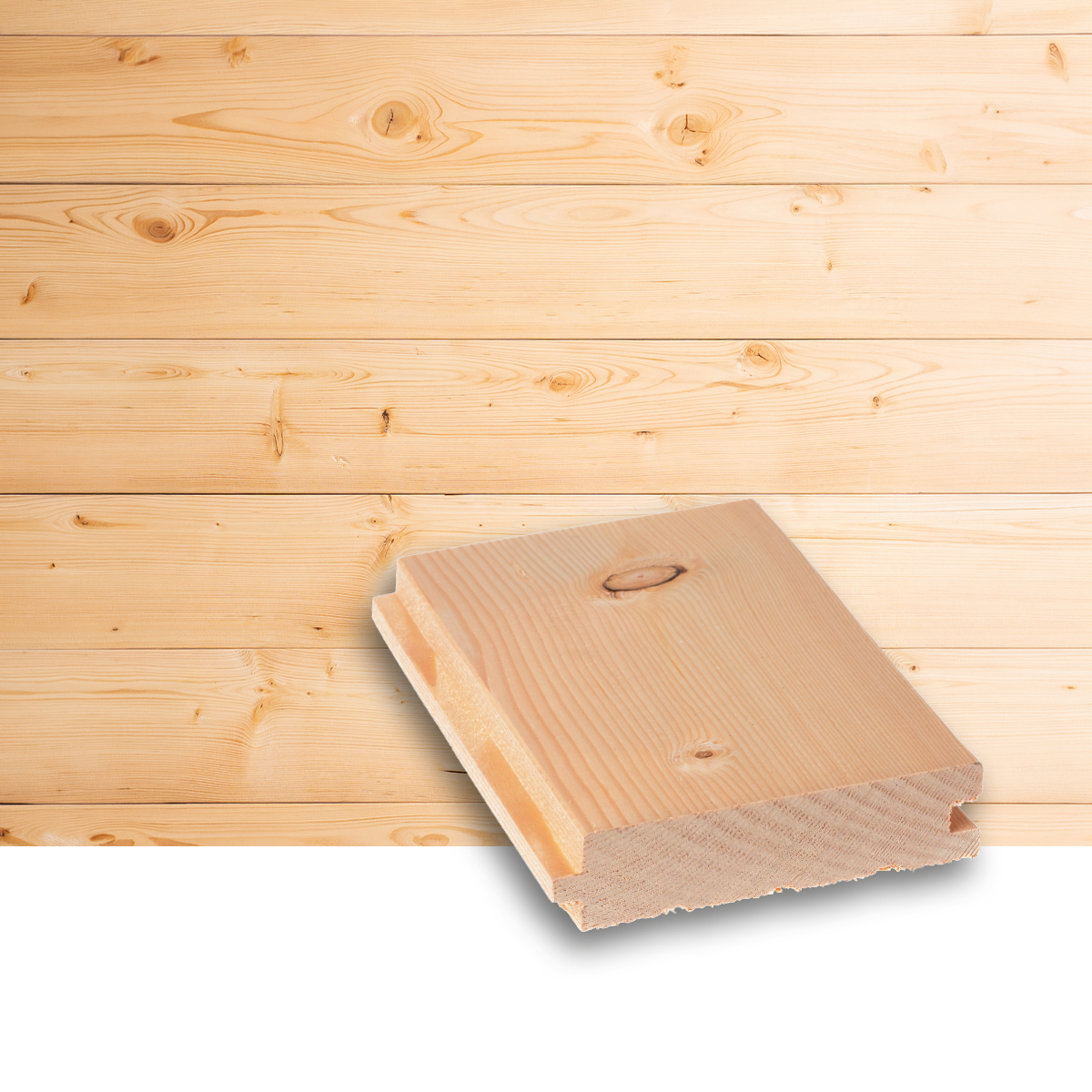
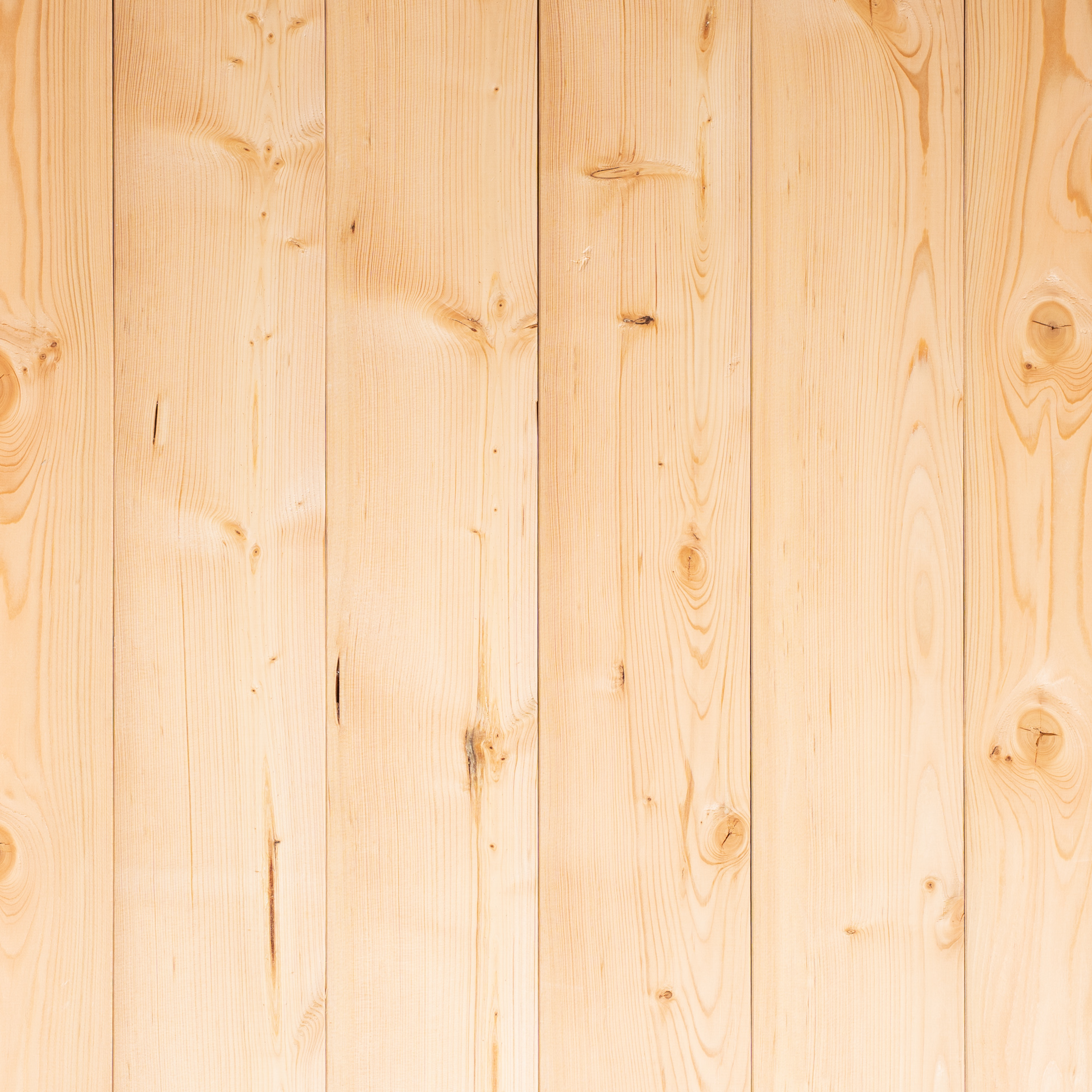
Price level

Ready to use
 Untreated
Uses
 | Dry interiors |
| Length | Available | |
|---|---|---|
| 2.40 m | 74.40 m | |
| 4.27 m | 614.88 m |
Quick facts
 | – a mid-priced wood species in our range. |
 | Untreated – the product leaves the factory unfinished. You can apply a finish or leave it natural. |
 | Dry interiors – suitable, surface treatment recommended. |
The ratings are based on our wood species suitability table (in Finnish).
Warm underfoot, durable for decades
A solid wood floor feels warm to walk on and stands up to heavy use. When the surface wears over the years, you can sand and refinish it, and the floor looks like new again.
Width sets the mood
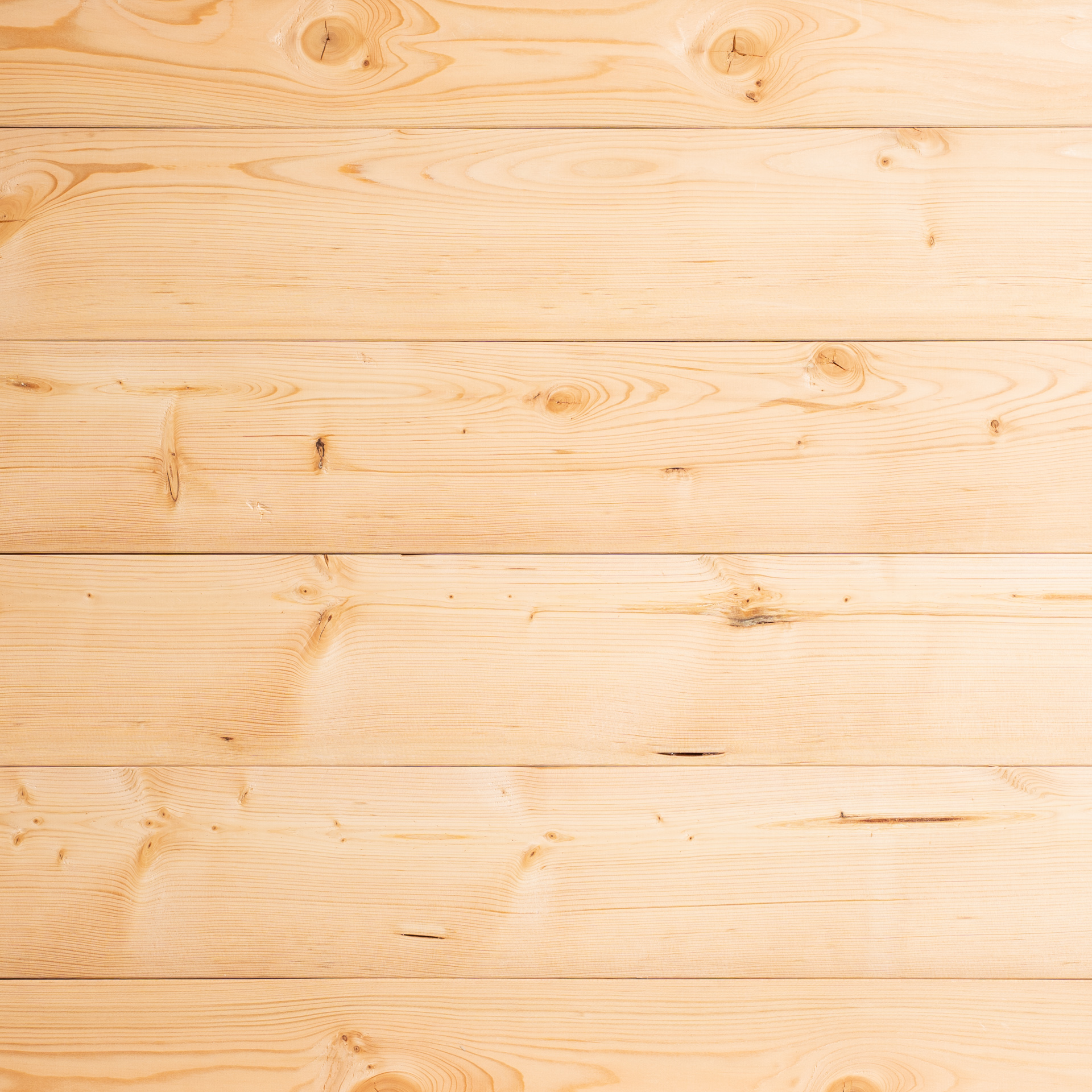
Narrow boards create a traditional, rhythmic floor. Wide boards make the room feel spacious and calm, and let the wood grain come through.
Choose the wood species to suit the space
- Pine is a Finnish classic whose tone warms to a golden brown over time. Our pine floorboards are dried to 8–12% moisture content, so they are suited to heated indoor spaces.
- Thermally modified pine is dark and dimensionally stable, since thermal modification reduces how much the wood moves with humidity.
- Douglas fir is a dense, striking wood species whose reddish heartwood brings warmth to a floor. Douglas fir floorboards have a higher moisture content than pine, so they are not suited to dry indoor spaces.
Made in Finland
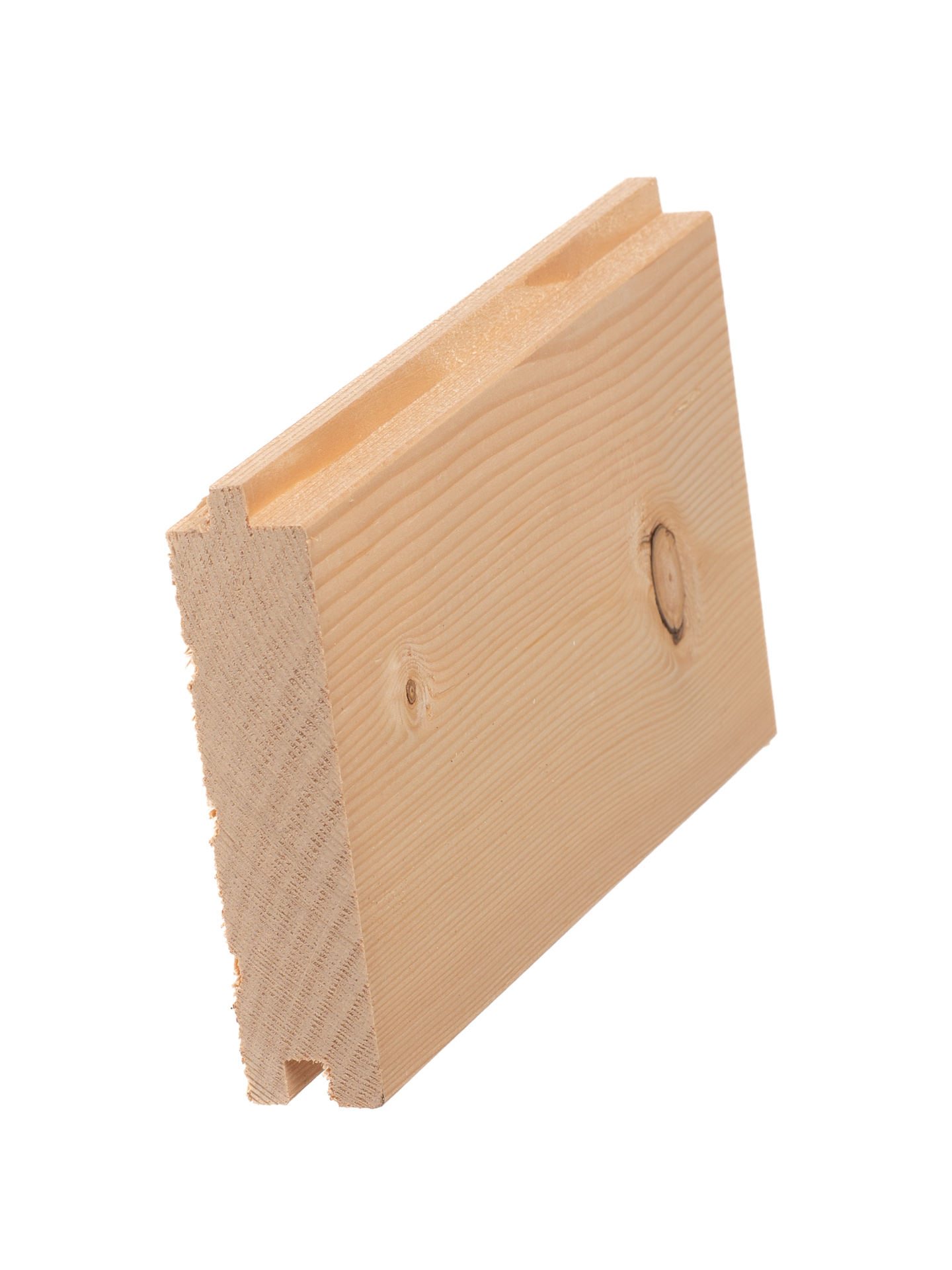
Our floorboards are made in Finland. Carefully planed boards have tongues and grooves that fit tightly, so installation goes smoothly.
✅ Responsibly manufactured in Lempäälä
✅ Completely natural and safe product
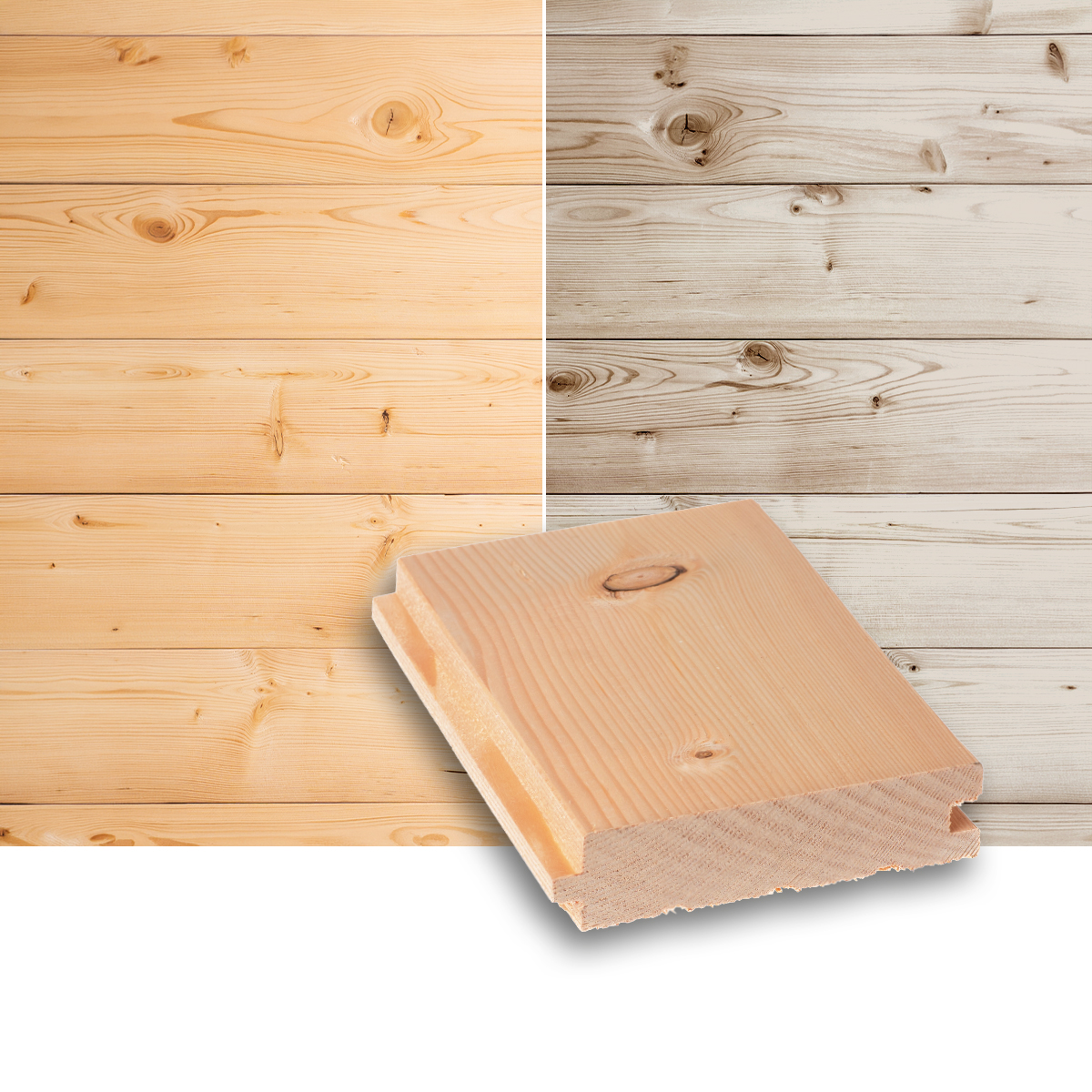
✅ Colourful with subtle variations, weathers to an elegant grey
✅ Naturally strong and highly rot-resistant
✅ No surface treatment needed for outdoor use, nearly maintenance-free
✅ Raw material from PEFC-certified sources
Our product uses Douglas fir, a naturally highly rot-resistant softwood. Its subtly reddish tones gradually develop into a beautiful silver-grey with exposure to the elements. Strong and durable, Douglas fir requires no surface treatment outdoors and is almost maintenance-free. Our Douglas fir products are responsibly produced, environmentally friendly, and sourced from PEFC-certified forests.
Colours in the images are indicative, and your screen settings affect how they look. Wood is a natural material, so its shade and grain always vary. Lighting and the colours of surrounding surfaces and furniture also affect how the wood looks in the finished space.
Product information
| Tuotenimi | LATTIALAUTA DOUGLASKUUSI 28x120 HLL 18% |
| Tuotenumero | 5312 |
| Alkuperämaa | Suomi |
| Toimitusaika | tänään, kun tuotetta varastossa |
| Saatavuus | Varastotuote |
| CN-koodi | Douglas Fir - Profiled - CN 4409 1018 |
Product measurements
| Vahvuus (mm) | 28 |
| Leveys (mm) | 120 |
| Paino (kg/myyntiyksikkö) | 1,88 |
| Neliömenekki (m/m²) | 8,93 |
| Hyötyleveys (mm) | 112 |
| Pakkauskoko (kpl/pkt) | 2 |
Product features
| Puulaji | Douglaskuusi |
| Pintakäsittely | Käsittelemätön |
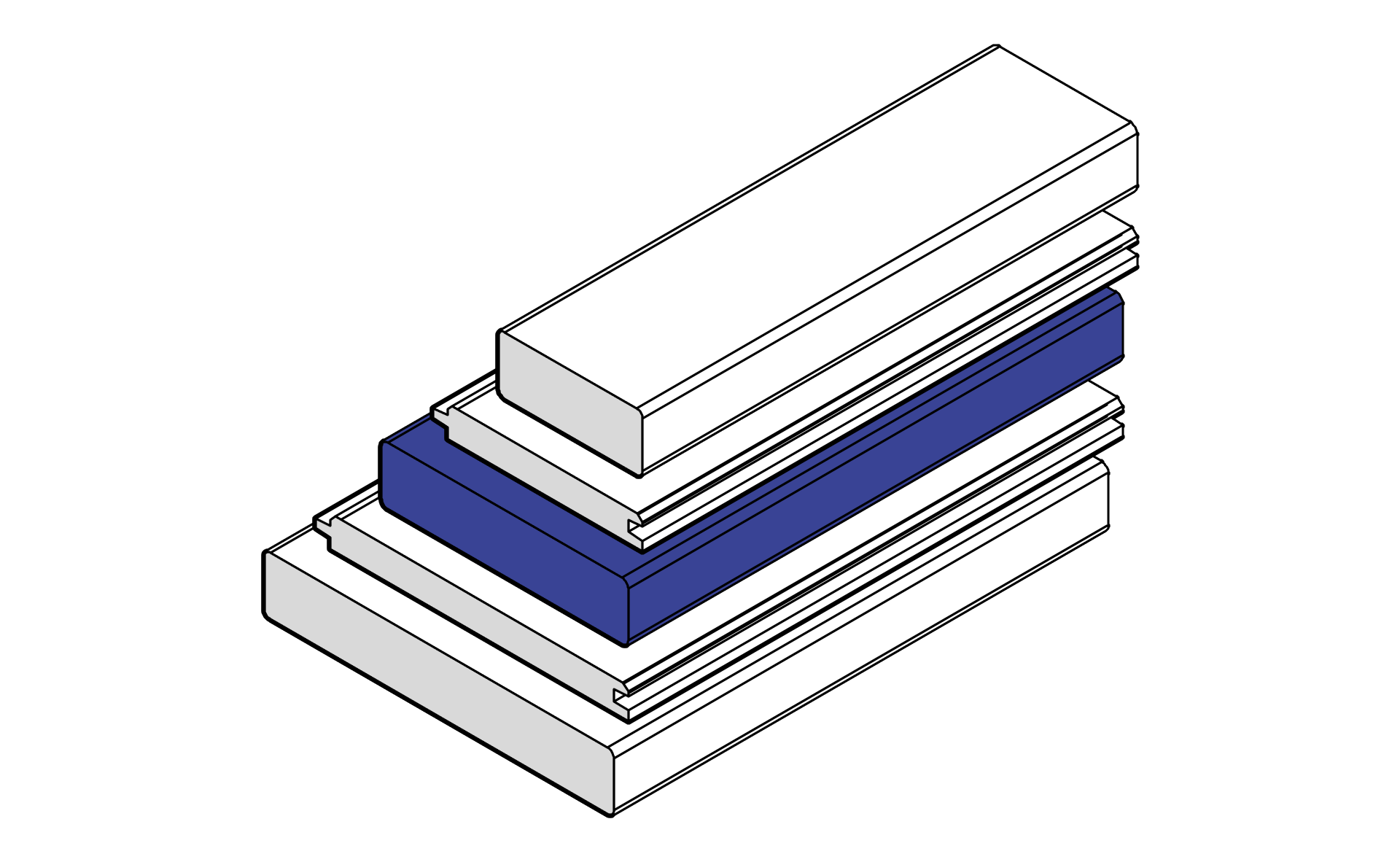
| Profiili | HLL |
| Päätyponttaus | Ei |
| Piilokiinnityspontti | Kyllä |
| Palokäyttäytyminen | D-s2, d0 |
Sustainability
| Hiilijalanjälki (CO2e kg/jm) | 0,14 |
| Hiilikädenjälki (CO2e kg/jm) | -2,55 |
| CE-merkintä | Kyllä |
| PEFC-serfitiotu | Kyllä |
Grading rules
You can download the grading rules applied in the manufacture of this product here: Douglas Fir
Minimum order size
Please note that we deliver our products in bundles. Bundle size is indicated together with stock information on top right corner.
 Planning your wooden floor
A wooden floor is durable and warm, and it suits new builds, renovations and cottages alike. When the surface wears, you can sand and treat the floor again and change its colour at the same time.
Choose a floorboard to suit the space
Wood moves with the humidity, so choose a board whose moisture content suits the space.
- Warm indoor spaces: floorboards with a moisture content of 8–12%.
- Cold spaces and spaces heated only part of the year: floorboards with a moisture content of 18%.
The product information shows the moisture content and intended use of each board. End-matched boards reduce waste.
The ends of floorboards that are not end-matched almost always need trimming, so allow about 50 mm of extra length per board.
 Installing floorboards
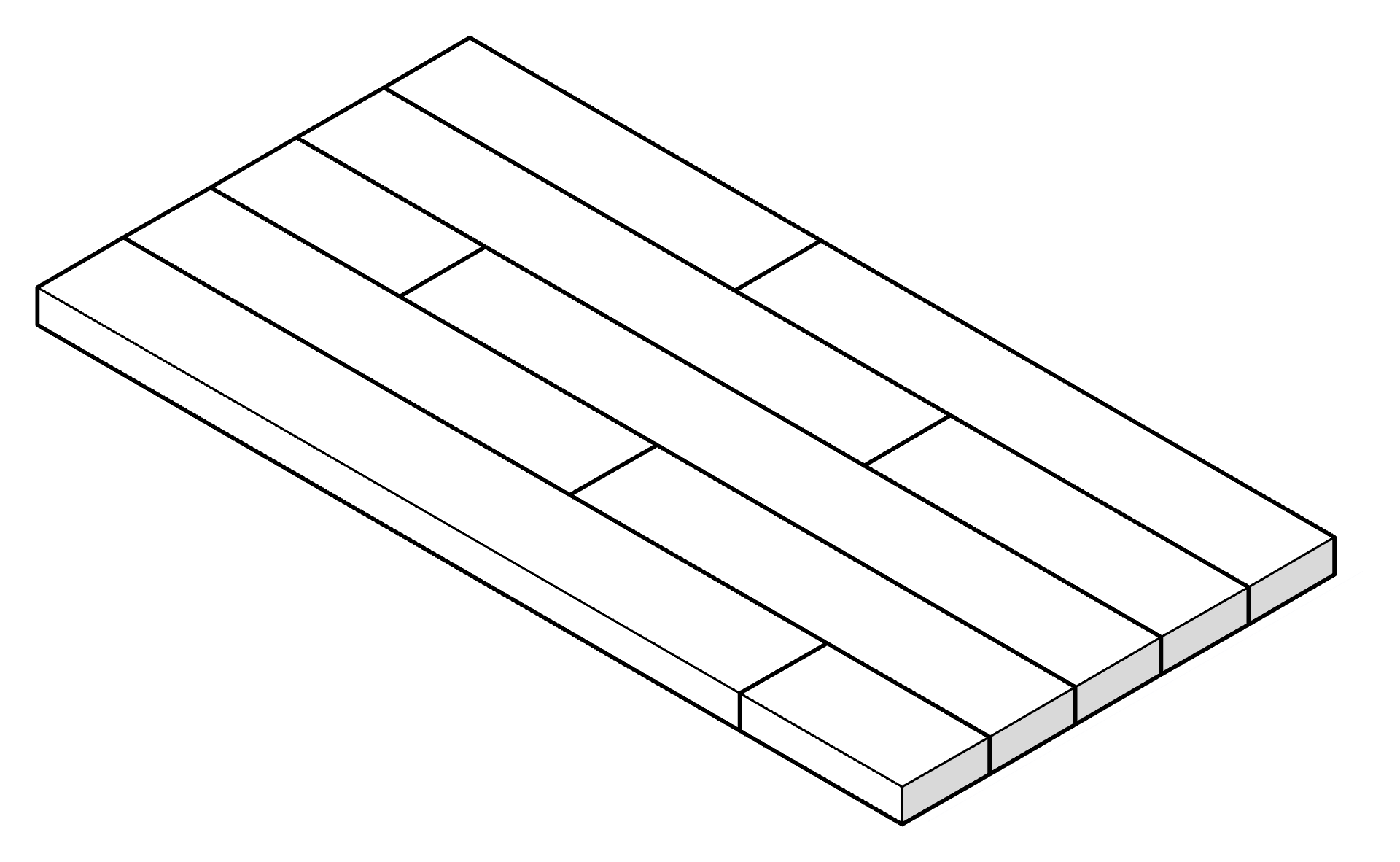
These instructions cover installing solid tongue-and-groove floorboards on battens or floor joists. Choose the floorboard to suit the space: boards with a moisture content of 8–12% for heated interiors, and boards with a moisture content of 18% for unheated spaces or spaces heated only part of the year.
 Storage and acclimatisation
- Let the boards acclimatise. Bring the boards into the room where they will be installed 1–2 weeks before installation. In a heated room, the temperature should be about +20 °C and the relative humidity 40–60%.
- Store the boards correctly. Keep the boards flat in their unopened packs, at least 30 mm off the ground. Open the packs just before installation.
- Finish wet work first. Levelling, tiling and painting must be finished and dry before you bring the floorboards into the room.
Good to know: Boards dried to 18% moisture content shrink by up to 3–4% in width in warm indoor air, and gaps open up at the joints. That is why they are not installed in spaces heated all year round.
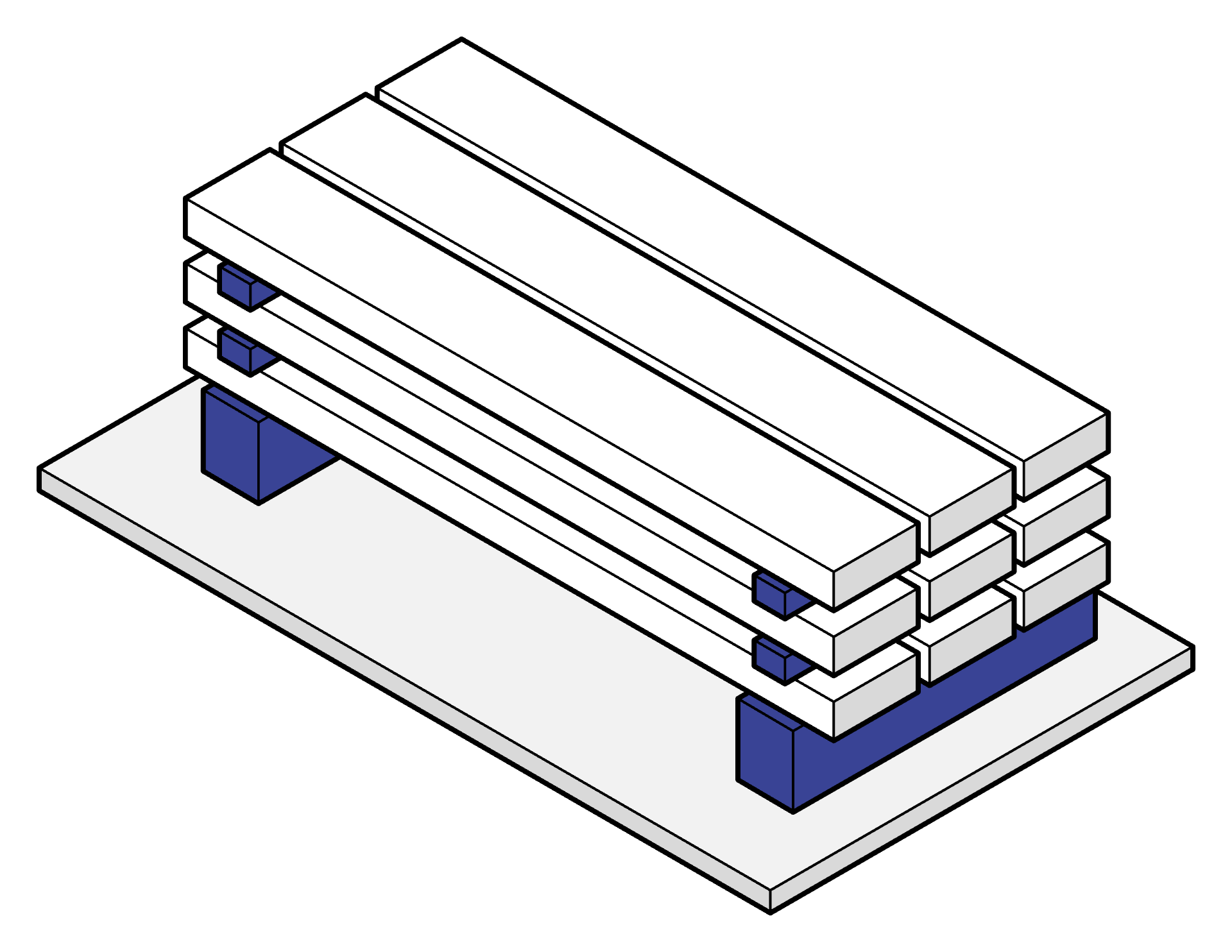
Before installation
- Allow for waste. Order about 10% more boards than the calculated quantity.
- Allow for trimming. The ends of boards without end matching almost always need to be trimmed, so allow about 50 mm extra on each board.
- Check the subfloor. The battens or joists must be straight, rigid and level. For 28 mm floorboards, the batten spacing is no more than 600 mm. For thinner and thermally modified boards, use a closer spacing of about 400 mm.
- Choose the direction. Lay the boards across the battens. When the boards run away from the window wall, in the direction of the light, the joints are less visible.
- Sort the boards by colour and knots so that you can spread them evenly over the whole floor.
- Underfloor heating: a solid wood floor dries out and gaps open up when the floor warms up. Check suitability before laying floorboards over underfloor heating.
Laying the floor
- Leave room for movement. Wood moves with humidity, so leave a 10–15 mm gap at the walls and fixed structures. The gap is hidden under the skirting board.
- Start from a straight line. Lay the first board with the groove facing the wall and check its line carefully, as it determines how straight the whole floor will be. Face-fix the first row close to the wall so that the fixings are hidden under the skirting board.
- Stagger the joints. Place the end joints of neighbouring rows at different points. The ends of boards without end matching always land on a batten. End-matched boards can also be joined between battens.
- Close the joints tightly. Knock the boards together using a tapping block. Do not hit the tongue directly, as it can be damaged.
- Fix through the tongue. Fix each board at an angle through the base of the tongue into every batten so that the fixings stay hidden. You can use nails or slim-head screws made for floorboards. The fixing should be about 2–2.5 times the thickness of the board.
- Last row: rip the board to width and face-fix it close to the wall.
Thermally modified boards: Use stainless steel fixings. Thermally modified wood is more brittle than untreated wood, so fix the boards with a nail gun or pre-drill holes for screws, and avoid hand nailing near the ends of the boards.
Fix the skirting board to the wall, not to the floor, so that the floor can move under the skirting board.
Surface treatment
Treat an untreated floor right after installation, before the room is used. Floor lacquer, floor oil and wax protect the surface from dirt and wear and make cleaning easier. On knotty boards and boards with checks, the best result comes from filling the cracks and knot holes before treatment.
If you are unsure about any step, contact a professional installer.
 Caring for a wooden floor
Regular cleaning and timely maintenance keep a wooden floor looking good for decades.
- Remove sand and dust regularly with a vacuum cleaner or a soft brush. Sand wears the floor surface like sandpaper.
- Clean with a damp mop, not a wet one. Wipe the floor with a well-wrung mop and a cleaner made for wooden floors. Oil soap is suitable for oiled floors. Avoid excess water and strong detergents.
- Protect the surface. Fit felt pads to furniture legs and put a doormat at the entrance.
- Keep the humidity even. Wood shrinks in dry air and swells in humid air. In winter, gaps may open between the boards and close again in summer. This is normal for a wooden floor. The gaps stay smaller when the relative humidity is 40–60%.
- Sound is part of a wooden floor. A wooden floor may creak underfoot. The sound varies with the humidity in the room, as the boards shrink, swell and move slightly against each other. This is completely normal and is not a defect.
Maintenance treatment
- Lacquered floor: When the lacquer starts to wear, clean the floor, lightly sand the surface to a matt finish, remove the dust and apply a new coat of lacquer.
- Oiled floor: Oil worn areas as needed, once or twice a year in heavy use. Clean the floor before oiling and let it dry.
- Waxed floor: Wax worn areas and buff the surface.
Re-sanding
A solid wood floor can be sanded and re-treated many times. After sanding, the surface looks like new, and you can change the colour of the floor at the same time. Remove the sanding dust carefully before the new treatment.
Lauta.fi delivers product sample pieces to both consumer customers and professionals, such as architects, interior architects and designers, construction industry and procurement professionals.
If you are interested in ordering one or more sample pieces, please contact our sales department via email lauta@lauta.fi or phone +358 3 3123 6000 (On weekdays 8-16).