

✅ Responsibly made
✅ Completely natural and safe product
✅ Rich and varied in color
✅ Naturally strong and highly rot-resistant
✅ The royal of sauna materials
✅ Raw material from PEFC-certified sources
| Length | Available | |
|---|---|---|
| 3.05 m | 369.05 m |
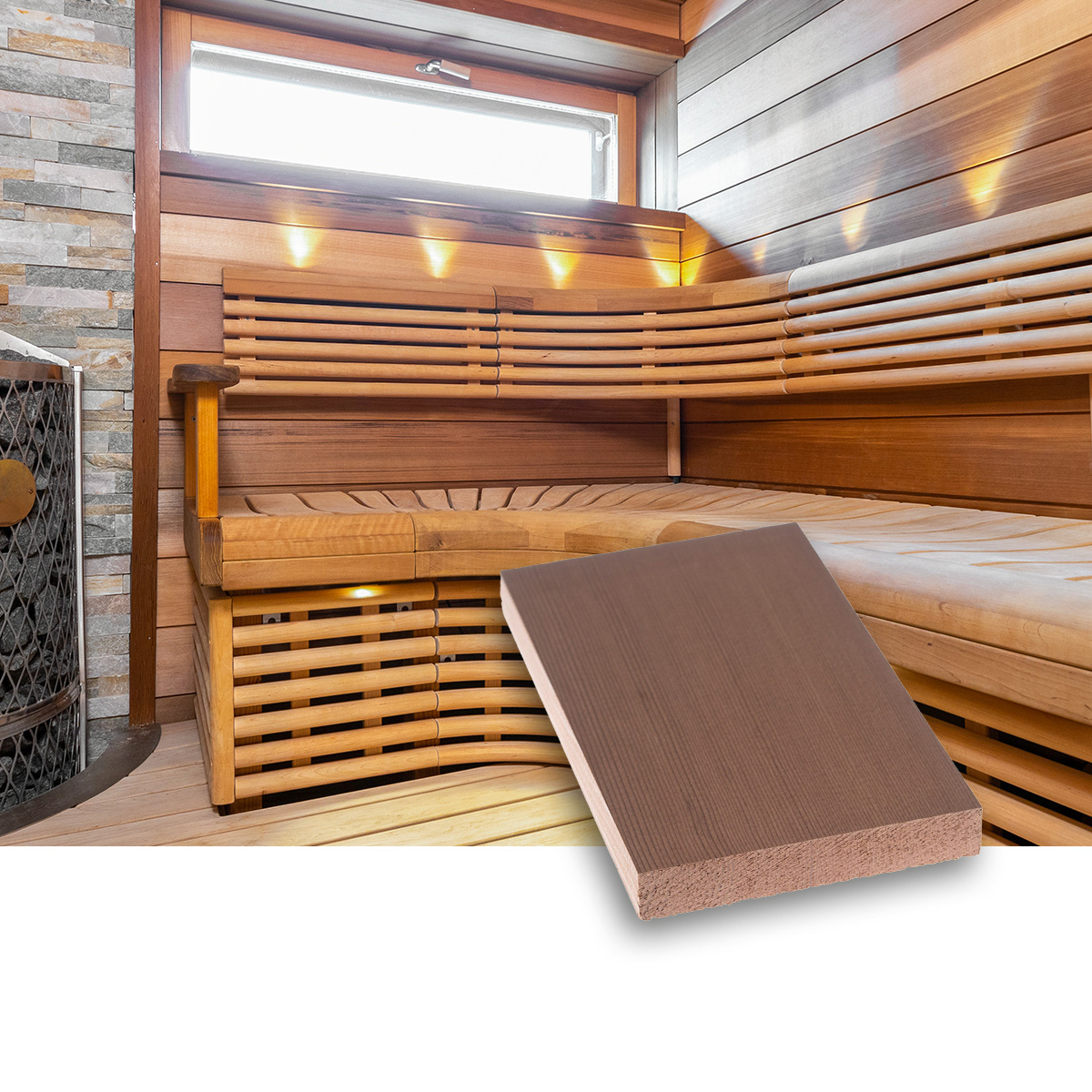
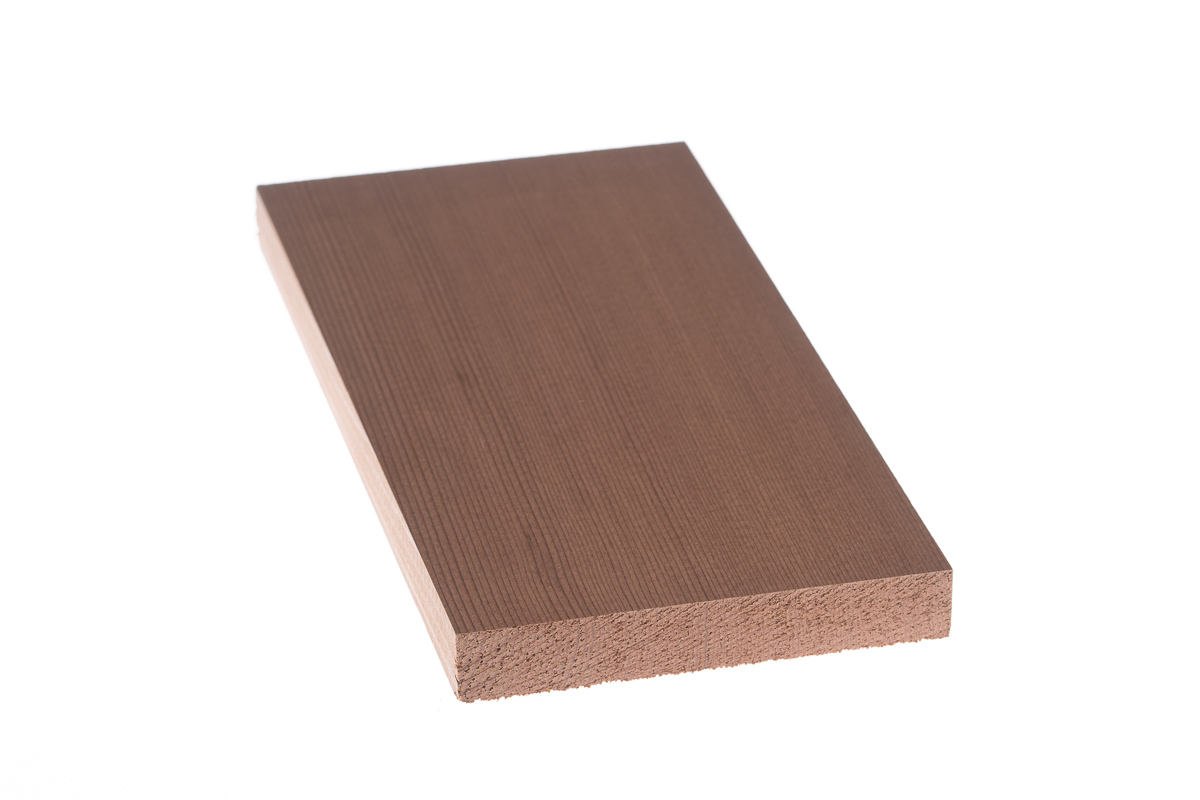
Giant cedar is valued in timber construction for its natural decay resistance and attractive appearance. Because the trunks of giant cedars can be several meters in diameter, the final products often show significant color variation. Shades range from pale sapwood to reddish or dark brown heartwood. To achieve a uniform look, panels should be sorted by shade before installation—light panels in one stack, darker or patterned panels in another. During installation, alternate panels from each stack so that colors are evenly distributed. Stainless steel fasteners are recommended due to the wood’s acidity.
Giant cedar is soft, making it easy to shape, but it can dent easily, so careful handling before installation is important. Wood density varies widely, even within a single board, which can make planing uneven and lead to a slightly rough surface. Moisture content can also vary within a piece, though dimensional movement is small compared to spruce or pine. KD drying is applied in Finland by adjusting kiln temperatures, resulting in a moisture content of 8–14%.
Raw Material and Processing
We source only the best blanks from Canada, sized 6” x 6–12” (152 mm x 152–304 mm), which are cut to planing dimensions in-house. This allows most of the material to be quarter-sawn. Blanks are dried in Finland to a target moisture content of 8–14%. Panels and boards are planed according to Finnish RT standards. Product lengths are invoiced in feet, converted to centimeters. Over 96% of giant cedar products are straight-grained (quarter-sawn), and mixed-grain blanks are avoided. The cutting stage allows us to influence grain orientation in the final product.
All our giant cedar products are PEFC-certified. Native to North America, the trees can grow up to 100 m tall with trunks several meters wide. They can live over 1,000 years, though timber trees are typically 300–700 years old, and the largest trunks often have decayed heartwood. Giant cedar has a distinctive natural scent that fades over time.
Despite its exceptional longevity and widespread use, giant cedar is not considered endangered due to its broad distribution.
Product information
| Tuotenimi | JÄTTILÄISTUIJA 15 x 95 SH A |
| Tuotenumero | 4246 |
| Alkuperämaa | Suomi |
| Toimitusaika | 2 päivää, kun tuotetta varastossa |
| Saatavuus | Tuote poistuu valikoimasta |
| CN-koodi | Western Red Cedar - Calibrated - CN 4407 1920 |
Product measurements
| Vahvuus (mm) | 15 |
| Leveys (mm) | 95 |
| Paino (kg/myyntiyksikkö) | 0,5273 |
| Neliömenekki (m/m²) | 10,00 |
Product features
| Puulaji | Jättiläistuija |
| Pintakäsittely | Ei käsitelty |
| Palokäyttäytyminen | D-s2, d0 |
Sustainability
| Hiilijalanjälki (CO2e kg/jm) | 0,06 |
| Hiilikädenjälki (CO2e kg/jm) | -1,08 |
| CE-merkintä | Ei |
Minimum order size
Please note that we deliver our products in bundles. Bundle size is indicated together with stock information on top right corner.
Surface treatment brings out the best in wood
The right surface treatment finishes the wood for exactly the purpose it's meant for. It protects the wood, extends its life cycle and gives it a color that suits the look of your home or building.
Not all wood needs treatment, but surface treatment lets you highlight different qualities of the wood. When the wood is treated during manufacturing, it's ready to install right away. This makes tight construction and renovation schedules easier to manage.
Why choose industrial surface treatment?
We paint and treat the wood on our own industrial paintline right after planing. At that point, the wood surface is open and the paint or treatment soaks in effectively. The temperature and humidity on our paintline stay constant, so the paint spreads evenly and dries properly. The result lasts longer than paint applied on site at the mercy of the weather.
- You save time. Industrially treated wood is ready to install, so there's no need to wait for good painting weather on site.
- You get an even finish. In controlled conditions, every board and panel receives the same treatment.
- The wood is protected during construction. The surface treatment protects the wood from rain and sunlight from the moment it's installed.
Surface treatment options
The right surface treatment depends on how the wood will be used and the look you're after.
- Opaque paint covers the grain of the wood and gives the surface an even, finished color. Outdoors, opaque paint protects the wood for a long time.
- Semi-transparent treatment gives the wood a color tone while letting its natural grain show through.
- Sauna protection treatment helps wooden sauna surfaces withstand high temperatures and humidity. It also makes the surface easier to keep clean.
- Fire-retardant treatment gives the wood surface a fire classification of B-s1, d0. This is the highest class available for wood construction products, so fire-retardant wood can also be used in buildings with strict fire safety requirements.
Good to know about wood species
Wood species differ from one another, and the need for treatment depends on both the species and how the wood is used.
- Spruce always needs a protective surface treatment outdoors. Spruce cladding is painted with either semi-transparent or opaque paint.
- Douglas fir and larch are naturally rot-resistant and dense, so they don't need surface treatment outdoors. Left untreated, they turn a beautiful silvery gray over time.
- Thermally modified wood has excellent dimensional stability thanks to thermal modification.
- For wood used in saunas, we recommend sauna protection treatment regardless of the species.
Responsibly treated
We use water-based paints and treatments from well-known manufacturers. Water-based products contain fewer solvents than solvent-based ones, so they put less strain on the environment and indoor air.
DID YOU KNOW? Because we want to operate as sustainably as possible, each batch we treat must be at least 500 meters. This way, we don't waste raw materials, and our operations stay efficient.
Ask us more
We have long experience in wood surface treatment, and we're happy to help you find the right treatment for your project. Contact our sales team to learn more about the options.
Installing sauna benches
The benches are the heart of the sauna, and your choice of wood species directly shapes its atmosphere. Sauna benches are usually left in their natural wood color, so the species largely determines the final look. Dark woods are thermally modified, while light woods are untreated.
The color of the wood changes over time due to UV light, moisture and changes in temperature. Dark thermally modified wood becomes lighter, and light wood becomes darker.
In addition to saunas, bench boards are well suited to furniture and many other uses. Always treat the wood with a product designed for indoor or outdoor use. The treatment finishes the surface and protects the wood.
Plan your benches
Size the benches to suit your sauna. Good löyly, the steam that rises from the heater, comes from benches at the right height.
- The distance between the upper bench and the ceiling is usually 100–120 cm.
- The height difference between the upper and lower bench is typically 40–45 cm.
- The upper bench is usually 55–60 cm deep.
- Allow at least 60 cm of seating width per person.
- Check the sauna heater manufacturer's instructions for the required safety distances between the heater and the benches.
Plan the direction and joints. Decide in advance whether to lay the boards lengthwise or crosswise, and where any joints will go.
Allow extra length for cutting. The stated product length is not an exact measurement, so choose boards that are at least 5 cm longer than you need.
Sort the boards. Sort the boards by color or knots before installation. This lets you spread them evenly across the bench surface as you install them.
Make sure the benches are well supported
The benches must be securely fastened. Never fasten the benches to the paneling alone.
- Fasten the bench brackets to the wall battens or to extra supports installed behind the paneling.
- Building a new sauna? Install the bench supports between the wall battens before you put up the paneling.
- Support long benches in the middle as well, for example with support legs.
Install the benches
- Cut the boards to size. Leave a gap of about 5–10 mm between the bench and the wall so that air can circulate and the wood can dry.
- Treat the cut ends. Treat the cut surfaces with the same product as the rest of the bench.
- Install the boards with the better side facing up.
- Leave a wide enough gap between the boards. The gap helps the benches dry properly and makes them easier to clean.
- Always fasten the boards from underneath. This keeps the screw heads out of the seating surface, where they would get hot.
- Use stainless steel screws suited to the hot and humid conditions of a sauna.
- Pre-drill the fastening points. This keeps the boards from cracking.
If you're unsure about any step, ask a professional installer for help.
Treat the benches before use
Always treat the benches with paraffin oil or sauna wax before using the sauna for the first time. The treatment protects the wood from moisture and dirt and also affects the final color. Paraffin oil, for example, slightly deepens the color of the wood.
Good to know
Dry the sauna after every use. Lift any removable bench sections upright and leave the heater on for about another half hour with the door closed and the ventilation vent open. Benches that dry well stay beautiful and last for a long time.
Western red cedar is soft and can be easily dented, so it should be handled carefully before installation.
Considerations for Installing Western red cedar Products
To achieve a uniform finish, it is recommended to sort the panels by color before installation. For example, place lighter panels in one stack and darker or patterned panels in separate stacks. During installation, alternate panels from each stack so that each color is evenly distributed across the surface. This ensures a consistent and even-looking panel finish.
It is recommended to use stainless steel fasteners during installation due to the wood's natural acidity.
The density of the wood can vary significantly, even within the same board. This may present challenges when planing Western red cedar, potentially causing rougher areas after planing. Similarly, moisture content can vary within a single piece. However, seasonal movement due to moisture is relatively minor compared to spruce or pine. During production, the product undergoes KD (kiln drying) treatment by controlling the kiln temperature, resulting in a moisture content of 8–14%.
Caring for sauna benches
Well-maintained benches stay beautiful and last for a long time. Daily care takes only a moment, and when you clean and treat the benches regularly, the wood stays protected from moisture and dirt.
Care during use
- Heat the sauna properly before use. A well-heated sauna dries faster and lasts longer.
- Use a seat cover. A seat cover protects the benches from sweat and dirt. Make sure, however, that it doesn't stain the bench.
- Wash before enjoying the löyly. Washing before you go into the sauna means less dirt ends up on the benches. Also avoid sitting on the benches in wet swimwear.
- Throw water only on the heater stones. Avoid wetting the benches.
- Choose your sauna pails with care. Copper pails and ladles may leave stains on the benches.
After using the sauna
- Don't leave textiles on the benches. Take seat covers and towels out of the sauna after use. A damp textile left to dry on the benches can leave a dark mark on the wood. Textiles left in the sauna are also a fire risk. Never dry laundry on top of the sauna heater.
- Dry the sauna. Leave an electric heater on for at least 30 minutes after use so that the wooden structures dry out. If you have a wood-burning heater, add a few more logs as you leave. Keep the door and window closed, the exhaust vent open and the mechanical ventilation on, so that moisture leaves through the ventilation system.
- Let the pails dry. Empty the water pails and turn them upside down to dry, preferably outside the sauna.
During the first year
- Tighten the screws. The wood shrinks during the first year of use, so tighten the bench screws 1–2 times.
- Thermally modified benches may release some color at first. The color comes from dust left in the wood during machining, and it comes off when you wash the benches.
Thorough cleaning
Wash the benches 1–4 times a year, depending on how often you use the sauna. Rinsing the benches with water after every use is not good for them. Repeated wetting puts stress on the wood and makes it prone to cracking, and moisture left on the benches encourages the growth of microbes.
- Warm the sauna slightly before washing. A little heat loosens dirt and speeds up drying. Don't wash a hot sauna, however, or the detergent will dry on the surface.
- Move the stool out from under the benches so that washing water doesn't run onto it.
- Use a sauna detergent. Choose a mild detergent designed for wooden sauna surfaces. Avoid chlorine-based and disinfecting products. Chlorine evaporates even at low temperatures and is harmful to health, and strong products can bleach and damage the wood surface.
- Scrub with a soft brush along the grain of the wood. A hard brush raises the grain and leaves the surface rough.
- Rinse thoroughly with clean water. Never use a pressure washer.
- Let the sauna dry properly. Make sure there is good ventilation, but avoid drying the wood too quickly so that it doesn't crack.
Stubborn stains
If stains don't come off with washing or the bench surface has become rough, sand the surface lightly with fine sandpaper along the grain. Remove the sanding dust carefully and treat the sanded areas again.
Maintaining the surface treatment
The maintenance interval for the surface treatment depends on the product, where it's installed and how often you use the sauna. Maintain the surface in good time, so that the wood isn't damaged when its protective treatment wears off. Benches in a sauna that gets heavy use need more frequent treatment.
Before treatment: Wash the benches and let them dry properly. Sand the surface if needed and remove the sanding dust. Protect the floor, for example with plastic sheeting, as oil and wax soak easily into tile joints.
Paraffin oil
Treat the benches with paraffin oil at least once a year, preferably twice. For thermally modified benches, we recommend paraffin oil only.
- Paraffin oil soaks into the wood, makes it harder for water to penetrate and repels dirt.
- The oil deepens the color of the wood and brings out its character. Dark areas darken noticeably, while light areas change only a little. That's why alder and thermally modified aspen, for example, may look patchy after treatment. This is completely normal.
- Test the oil on an inconspicuous spot first to see how the color changes.
- Apply the oil with a sponge or cloth along the grain. Remember to treat the board ends too.
- A little warmth in the sauna helps the oil soak in. Wipe off any oil that hasn't soaked in.
- Let the oil soak in completely before using the sauna. The surface is ready for löyly after about 12 hours.
Sauna wax
Sauna wax protects untreated benches and also lets you add a color tone if you like. Treat the benches preferably once a year.
- Let the washed benches dry for at least 24 hours before treatment.
- One thin coat is enough. A coat that is too thick makes the surface slippery.
- Allow about 24 hours of drying time before using the sauna.
- Wait at least a month after treatment before washing the benches.
Always follow the treatment product manufacturer's instructions.
Also remember
- Follow the sauna heater manufacturer's instructions and never exceed the maximum permitted temperature. Excessive heat can warp the wood and cause a fire hazard.
- Check the heater stones regularly and replace any that have crumbled.
- Wooden surfaces darken naturally over time, fastest in the areas hit by hot steam.
Bench boards in other uses
Proper cleaning keeps surfaces in good condition and looking beautiful outside the sauna too, for example in furniture. Always treat the wood with a product designed for indoor or outdoor use that suits the application.
Sauna benches are traditionally made from wood, which is often the superior choice for durability, heat conductivity, and appearance. Although wood is a strong material, wooden products for wet areas—such as bench boards—always require surface treatment to withstand use. In sauna conditions, all interior materials are under heavy strain because both humidity and temperature fluctuate rapidly and significantly. For example, paraffin oil treatment helps bench boards better endure heat and moisture changes, extending their service life considerably.
When choosing bench material, you should consider not only appearance but also the properties of each wood species. Aspen and alder, for instance, are often pleasant as bench materials because they conduct heat slowly and therefore remain cooler even at high sauna temperatures.
Wood is a nuanced natural material—every board is unique and changes over time. This makes it an excellent choice for creating a visually warm sauna atmosphere. Bench colour is up to the builder; popular shades range from the dark brown of heat-treated wood to the nearly white tone of aspen. Surface treatments can alter or deepen the colour, allowing for a completely unique design tailored to the user’s taste.
Bench Design
- Choose the wood species to be used
- Decide the desired board width
- Determine the installation direction of the boards
- Decide the type and placement of the sauna heater
Benches can incorporate multiple board widths and more than one wood species. For a harmonious result, consider the colour, width, and profile of the wall panelling as well.
Note: Heat-treated aspen is not suitable for continuously heated saunas. Heat-treated alder is suitable for such saunas and has a similar tone to heat-treated aspen. The scent of freshly installed heat-treated radiata pine can be strong at first, making immediate sauna use unpleasant; thorough ventilation will reduce the smell.
Giant Thuja as a Construction and Interior Material
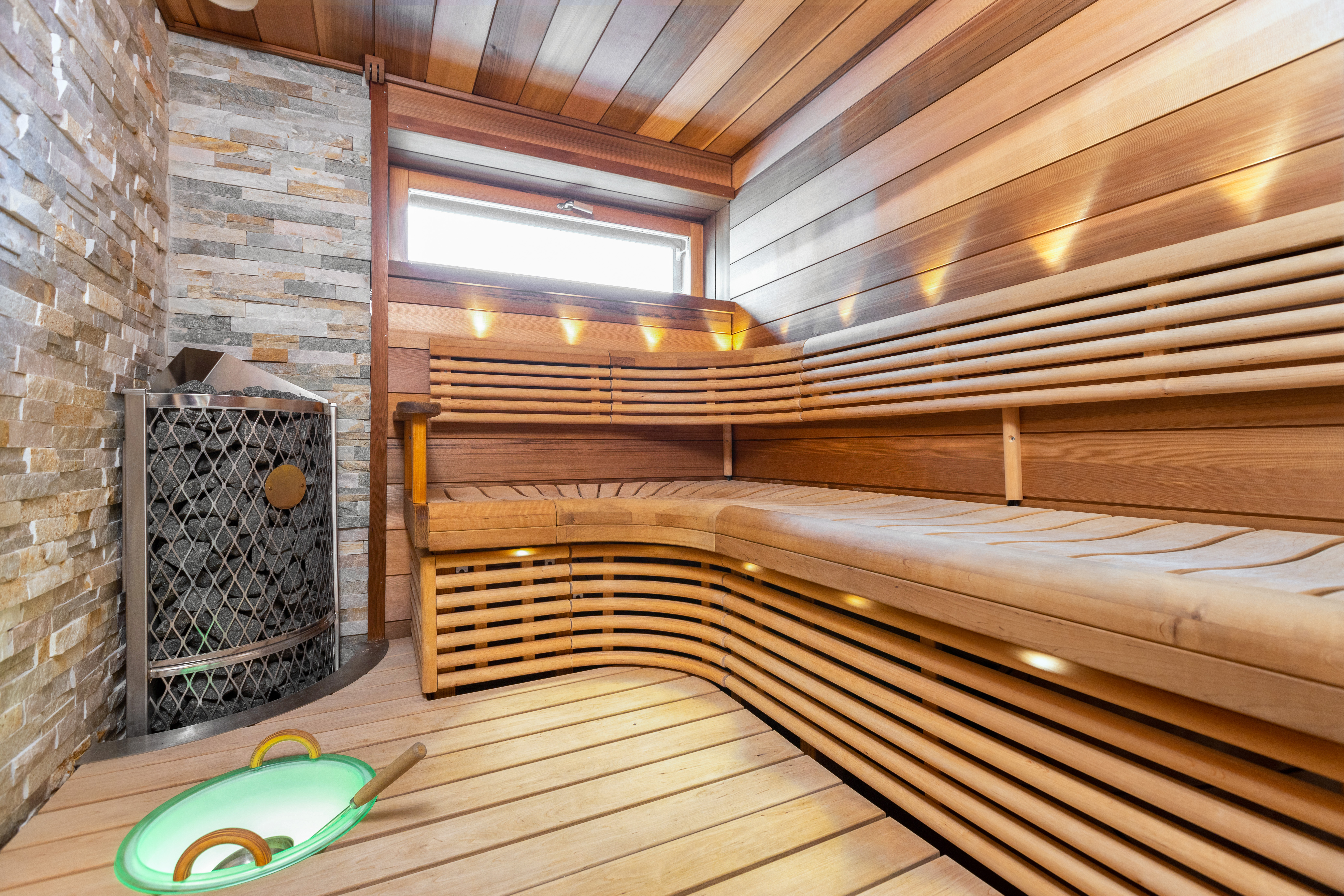
Giant thuja is valued as a building and interior material for its unique appearance and excellent moisture resistance, making it an ideal choice for sauna paneling or benches.
Because the trunk of a giant thuja can reach several meters in diameter, the finished products typically feature significant colour variation. The sapwood has a reddish tone, while the heartwood is dark brown. This natural variation creates a beautiful, vibrant surface for interior walls and ceilings. During installation, panels should be sorted so that different shades are evenly distributed across the entire area, ensuring a harmonious overall look.
The Best You Can Choose for a Sauna!
The natural colour variation of giant thuja—also known as western red cedar—creates a stunning, lively surface for both interior walls and ceilings. Thanks to its excellent moisture resistance and minimal dimensional changes, giant thuja is an ideal material for sauna paneling and benches.
We source only the best possible timber from Canada. The blanks are 6” x 6–12” (152 mm x 152–304 mm) and are sawn to planing-ready dimensions in-house. This allows us to ensure the wood is radially sawn. The blanks are also dried in Finland to a target moisture content of 8–14%.
We plane the panels and bench boards according to Finnish RT card dimension guidelines, and all giant thuja panels feature a hidden nailing tongue. Product lengths are billed based on foot measurements, converted directly to centimeters with exact precision. Over 96% of our giant thuja products are straight-grained (radially sawn). We aim to avoid mixed-grain blanks (containing both radial and vertical grain). By controlling the cutting phase of the blanks, we can strongly influence the final grain direction of the product.
Lauta.fi delivers product sample pieces to both consumer customers and professionals, such as architects, interior architects and designers, construction industry and procurement professionals.
If you are interested in ordering one or more sample pieces, please contact our sales department via email lauta@lauta.fi or phone +358 3 3123 6000 (On weekdays 8-16).